

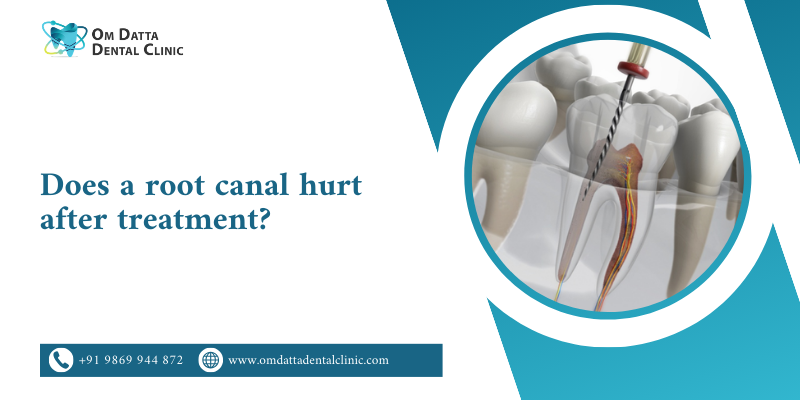
You sit through the procedure and go home relieved that the infected tooth has been treated.
And then, a few days later, you feel something.
A dull ache.
A little throbbing.
Maybe even sensitivity.
The first thought that crosses your mind is:
“Wasn’t this supposed to fix the pain?”
At Om Datta Dental Clinic, this is one of the most common concerns patients share after undergoing a painless root canal treatment in Ghatkopar. The truth is, some discomfort after the procedure is normal. But persistent or unusual pain can feel worrying.
Let’s calmly walk through what’s normal, what isn’t, and when you should actually be concerned.
Why Is My Tooth Still Throbbing a Week After a Root Canal?
A mild throbbing sensation for a few days after a root canal is common. But what about after a week?
Here’s what could be happening.
When a tooth is infected, the surrounding tissues, including the bone and ligaments, are inflamed. Although the infected pulp is removed during treatment, the surrounding tissues require time to heal.
Think of it like this:
The infection is gone, but the body is still healing.
Possible reasons for throbbing after a week:
- Inflammation in the surrounding tissues
- Bite slightly high after restoration
- Temporary irritation during healing
- An infection that was very deep before treatment
If the throbbing is mild and gradually improving, it’s usually part of recovery.
However, if:
- Pain is increasing
- Swelling appears
- You feel sharp pain while biting
It’s important to revisit your dentist.
At Om Datta Dental Clinic, patients undergoing painless root canal treatment in Ghatkopar are always advised to return if discomfort doesn’t improve steadily. Early review prevents bigger issues later.
Is It Normal to Have a Headache After a Root Canal?
Yes, sometimes it is.
A root canal requires keeping your mouth open for an extended period. This can strain jaw muscles and even cause tension around the temples.
Some common reasons for headache include:
- Jaw muscle strain
- Stress or anxiety during the procedure
- Mild inflammation around the treated tooth
- Clenching due to discomfort
Usually, this type of headache is temporary and subsides within a day or two.
If the headache is severe, persistent, or associated with swelling or fever, it should be evaluated. But mild tension headaches are not uncommon.
Your comfort matters. That’s why choosing the best dentist in Ghatkopar at Om Datta Dental clinic isn’t just about treatment quality; it’s also about post-treatment guidance and follow-up care.
Can a Root Canal Fail a Week Later?
This is a question patients ask quietly, sometimes hesitantly.
The honest answer?
It’s rare, but possible.
A root canal can fail if:
- Infection wasn’t completely cleared
- A hidden canal was missed
- There is a crack in the tooth
- Bacteria re-enter due to delayed crown placement
But here’s what’s important to understand: a week of mild discomfort does not automatically mean failure.
Signs that may indicate a problem include:
- Persistent severe pain
- Swelling near the gum
- Pus discharge
- Pain that worsens instead of improving
Modern restorative dentistry focuses on precision, sterilization, and sealing techniques that greatly reduce failure rates.
At Om Datta Dental Clinic, careful imaging and proper sealing protocols are followed to ensure predictable healing after a painless root canal treatment in Ghatkopar.
Is Throbbing Pain Worse at Night After a Root Canal?
Many patients say this. Yes, it can feel worse at night.
Why?
When you lie down, blood flow to the head increases slightly. This can create pressure in the treated area. Also, at night, there are fewer distractions, which makes you more aware of sensations.
Mild throbbing that:
- Responds to medication
- Reduces gradually
- Doesn’t involve swelling
It is usually part of healing.
But if pain wakes you up repeatedly or becomes sharp and unbearable, it should be checked.
Healing should feel like gradual improvement, not escalating discomfort.
Can Tooth Sensitivity Persist After a Root Canal?
This confuses many patients.
Since the nerve inside the tooth is removed, people assume there should be zero sensitivity.
Here’s the clarification:
The treated tooth no longer has nerve tissue inside. But the surrounding tissues, the periodontal ligament and bone, still have sensation.
So you may feel:
- Sensitivity while biting
- Mild discomfort with pressure
- Tenderness when chewing
This usually improves within days to weeks.
However, temperature sensitivity (especially a strong reaction to hot or cold) is less common and may need evaluation.
That’s why proper follow-up and final crown placement are crucial parts of restorative dentistry. A well-fitted crown protects the tooth and prevents further irritation.
Can Sinus Issues Cause Tooth Pain After a Root Canal?
Yes, especially if the treated tooth is in the upper back jaw.
The roots of the upper molars lie very close to the sinus cavity. If you have:
- Sinus congestion
- Cold or flu
- Allergies
You may feel pressure or pain in the upper teeth.
This can mimic tooth pain even when the root canal is healing perfectly.
Signs that suggest sinus involvement:
- Pain increases when bending forward
- Pressure in the cheeks or forehead
- Nasal congestion
In such cases, treating the sinus issue resolves the tooth discomfort.
An experienced dentist will always evaluate whether the pain is dental or sinus-related before assuming treatment failure.
When Should You Be Concerned?
After a root canal, mild discomfort is normal.
You should contact your dentist if you notice:
- Swelling that doesn’t reduce
- Severe pain beyond 7–10 days
- Fever
- Visible pus
- Persistent sharp pain
Root canal treatment is designed to eliminate infection and preserve your natural tooth. With modern techniques, especially when done as a painless root canal treatment, recovery is usually smooth and predictable.
Healing Takes Time, Not Perfection
Many patients expect zero sensation immediately after treatment.
But healing is a process, not a switch.
Your body needs time to:
- Settle inflammation
- Repair surrounding tissues
- Adapt to the restored tooth
A little sensitivity doesn’t mean something went wrong. It often means your body is adjusting. Dentistry isn’t only about removing infection; it’s about restoring comfort, confidence, and trust.
With careful planning, advanced restorative dentistry techniques, and proper follow-up care, root canal recovery is usually straightforward.
If you’re experiencing discomfort after a root canal or are considering a painless root canal treatment in Ghatkopar, the team at Om Datta Dental Clinic is here to guide you calmly and clearly.
Book a consultation today, and let’s make sure your healing is on the right track.